
“Twenty dollars, parts and labor.”
In a repair estimate, parts and labor means the cost of replacement parts and the work to fit them. Here labor refers to the service charge. The total is twenty dollars.
A2-39 / CEFR A2 / EPISODE 39
Arranging bicycle repairs
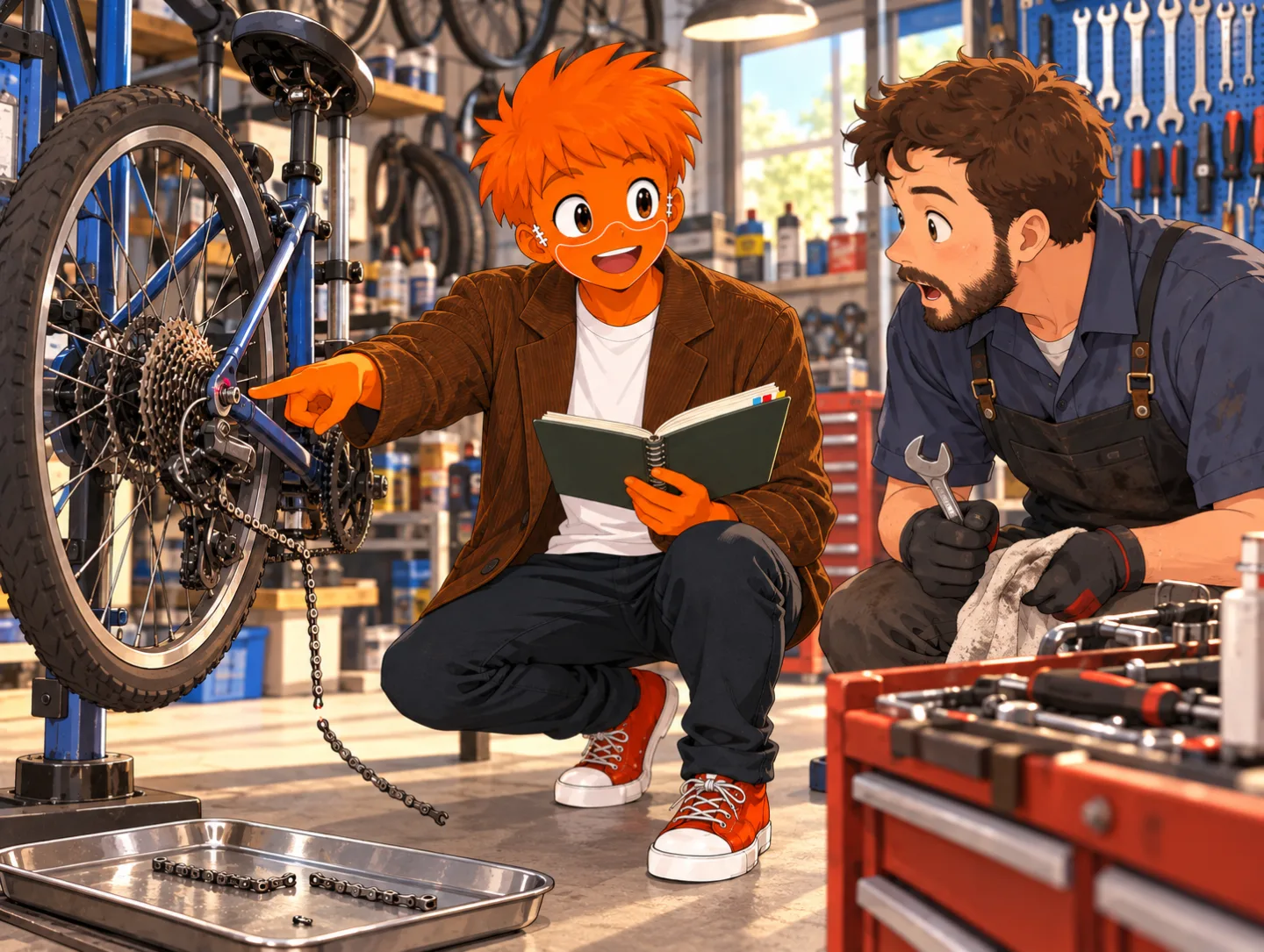
SceneAt a bicycle repair shop. A mechanic explains the work to Frank.
WORDS & CONTEXT
In a repair estimate, parts and labor means the cost of replacement parts and the work to fit them. Here labor refers to the service charge. The total is twenty dollars.
Keep a log means to maintain a written record. Frank's record of how often the bolt loosens shows his meticulous habits.
I'd rather not ... means "I would prefer not to ...." Because he once fell on a hill, Frank explains that he wants the spots that worry him checked as well. He does not claim that the loose bolt caused that fall. Cost extra means to require an additional charge; Frank is checking whether the extra checks are included in the price for the chain replacement.
Fair enough. is informal for "That's reasonable" or "That makes sense," used to accept someone's explanation or reason. The mechanic accepts Frank's reason for asking for the checks: he fell once before.
Make a note of ... means to write something down. Here the mechanic will record the problem that the marked bolt keeps coming loose. The later phrase list the repairs on your receipt means writing out the repairs on the receipt; it separates the note about the problem from the list of repairs actually done.
Include means to put something in, and the exact time you finish means the precise time the work is completed. A column is a vertical section in a table. When the mechanic offers to list the repairs, Frank asks him to record the finish time too. The punchline is Frank's thoroughness: he asks the mechanic for an exact time to fit his own detailed log.