
A2-47 / CEFR A2 / EPISODE 47

Vet Visit

Explaining an animal's condition

SceneAt a veterinary clinic. Tina brings a friend's dog she is looking after; Frank accompanies her.
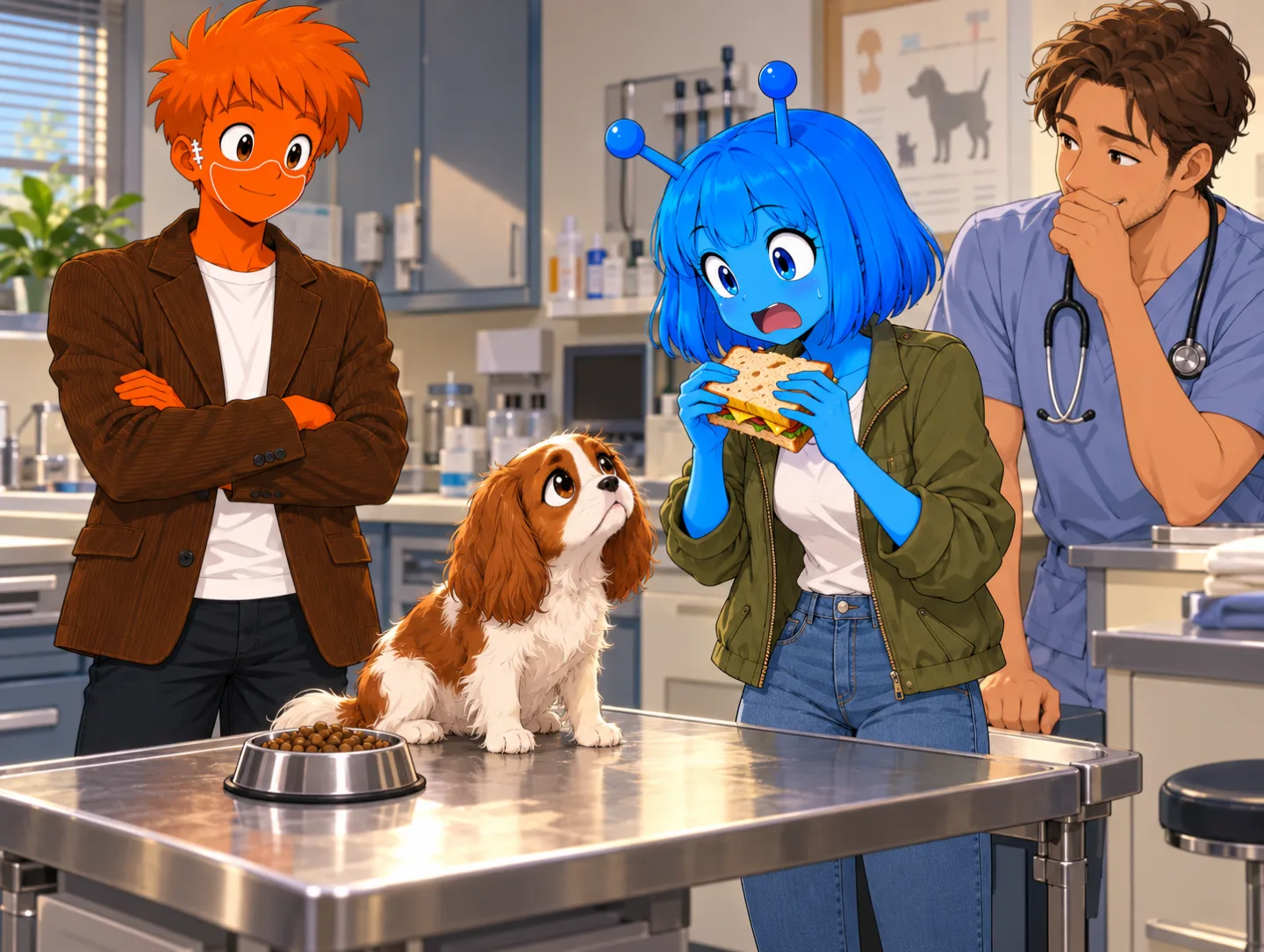
Tina and Frank talk to a vet beside a dog on an examination table.
Select the illustration to view it at full size in a new tab.

STORY English with optional Japanese translations

Narrator

Tina is looking after a friend's dog. He has stopped eating his dog food, so she and Frank have brought him to the vet.

ティナは友人の犬を預かっている。犬がドッグフードを食べなくなったため、フランクと一緒に動物病院へ連れてきた。

Tina01

He hasn't eaten his dog food since yesterday. I'm really worried.

昨日からドッグフードを食べてないんです。すごく心配で。

Vet02

Has he eaten anything else?

ほかには何か食べましたか?

Tina03

Nothing. Well... just a little chicken.

何も。ええと……鶏肉を少しだけ。

Frank04

And some cheese at two o'clock.

それから2時にチーズも。

Tina05

It was a very small piece.

ほんの小さな一切れよ。

Frank06

And you gave him half of my sandwich at four.

それから4時には、君が僕のサンドイッチを半分あげたよね。

Vet07

So he has been eating.

では、食べてはいるんですね。

Tina08

Not dog food. Only human food.

ドッグフードは食べてません。人間の食べ物だけです。

Narrator

The vet examines the dog.

獣医が犬を診察する。

Vet09

He seems well. He may be waiting for more of your food.

元気そうですね。あなたの食べ物をもっともらえるのを待っているのかもしれません。

Tina10

You tricked me! ...But he looks so sad. Maybe just one more treat?

私をだましたのね!……でも、すごく悲しそうな顔。おやつをもう一つだけなら?

Frank11

Tina, I think he's training you.

ティナ、しつけられているのは君のほうだと思うよ。

WORDS & CONTEXT

Words & context

“looking after a friend's dog”

Look after someone or something means to care for them. Tina is temporarily caring for a friend's dog while the friend is away.

“He seems well.” / “He may be waiting”

Seem means to appear to be, and may be ...ing means might be doing something. After examining the dog and asking what it has eaten, the vet gives her assessment of this dog. The line does not claim the dog is healthy just because it has been eating human food.

“You tricked me!” / “Maybe just one more treat?”

Trick someone means to fool someone, and a treat here is a snack for a dog. The first you is addressed to the dog, not the vet. Right after realizing the dog was waiting for food, Tina sees its sad face and wants to give it one more.

“I think he's training you.”

Train means to teach behavior. Normally people train dogs, but here Tina responds to the dog's sad face by handing over more food, so Frank teases that the dog is the one changing Tina's behavior: "I think you're the one being trained."