A2-21 / CEFR A2 / EPISODE 21

Volunteer Work

Asking about volunteer work

SceneAt a volunteer briefing. Frank is at reception.
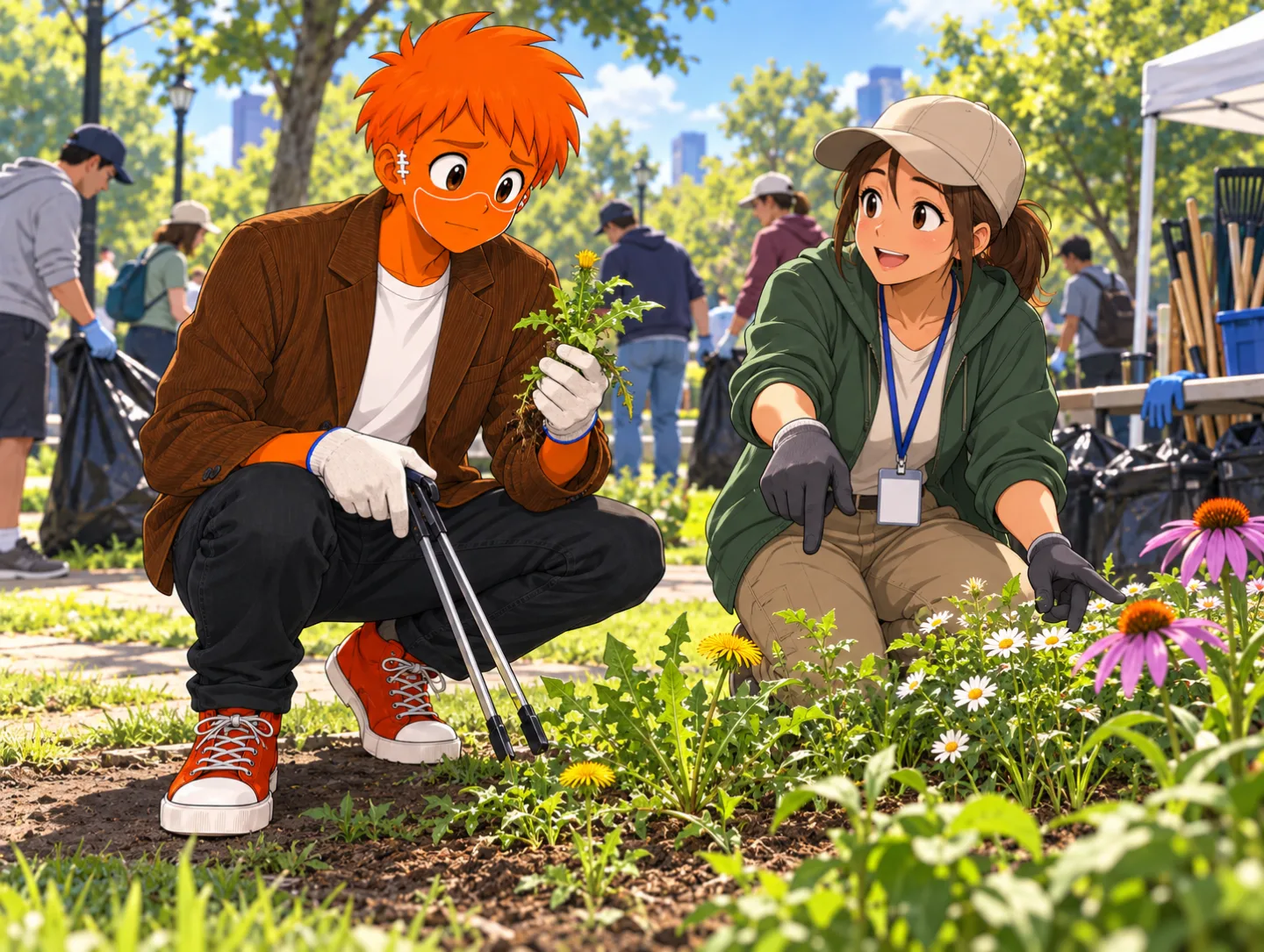
Frank and Tina listen to a coordinator while holding cleanup tools in a park.
Select the illustration to view it at full size in a new tab.

STORY English with optional Japanese translations

Narrator

Frank is at a volunteer orientation. A coordinator is signing him up for the park cleanup team.

フランクはボランティアの説明会に来ている。コーディネーターが公園清掃チームの登録をしている。

Coordinator01

Welcome! We clean the park every Sunday — three hours, with a coffee break.

ようこそ!毎週日曜に公園を掃除します。コーヒー休憩を挟んで3時間です。

Frank02

Sounds great. Do I need to bring any tools myself?

いいですね。道具は自分で持っていくべきですか?

Coordinator03

No, we provide gloves and tools for everyone.

いいえ、手袋も道具も全員分こちらで用意します。

Frank04

Good. What kind of work will I be doing?

よかった。どんな作業をするんですか?

Coordinator05

Mostly picking up litter and pulling weeds.

主にごみ拾いと草むしりです。

Frank06

I can do both. How will I know which plants to pull?

どちらもできます。どの植物を抜けばいいか、どう見分けるんですか?

Coordinator07

Don't worry. We'll show you before you start.

心配しないで。始める前にこちらで教えます。

Frank08

Good. I would hate to pull an innocent plant. I have a whole page of questions.

よかった。罪のない植物を抜きたくはありませんから。質問はまだ、紙1ページ分あります。

Coordinator09

Bring your list on Sunday at nine. We may need all three hours just for questions!

では、日曜の9時にそのリストを持ってきてください。質問だけで3時間全部使ってしまうかもしれませんね!

Frank10

I'll arrive ten minutes early, then. For the questions.

では、10分早く来ます。質問の時間を取れるように。

WORDS & CONTEXT

Words & context

“Mostly picking up litter and pulling weeds.”

Litter is rubbish scattered in public places; pick up litter means to collect it. Weeds are unwanted plants, and pull weeds means to remove them. These are the main tasks in the park cleanup.

“I would hate to pull an innocent plant.”

I would hate to ... expresses that you really do not want to do something. Innocent means blameless. Frank does not want to pull up a plant by mistake when it is not a weed. Treating a plant as an "innocent" party is a very Frank-like, serious joke.

“a whole page of questions” / “For the questions.”

A whole page of ... means an entire page's worth of something. Frank still has a full page of questions, so the coordinator jokes that the questions alone might take all three hours of the session. Frank takes that seriously and promises to arrive ten minutes early to make time for questions before the work. The final For the questions. adds the reason for coming early.